

Uzbekistan • 24 March, 2026
What else can you see in Nukus besides the Savitsky Museum
Nukus is not only the capital of Karakalpakstan, but also a city that holds a huge number of cultural, historical, and natural treasures. Besides the famous Ivan Savitsky Museum, which has become a landmark for art lovers, there are many unique objects in Nukus and its surroundings that tell about the region's past, its traditions, and life in different eras. In this article, we will discuss in detail the places worth visiting to truly get acquainted with Karakalpakstan.
Museum of History and Culture of Karakalpakstan
The Museum of History and Culture of Karakalpakstan is an important cultural and historical center of the region, reflecting the rich heritage and centuries-old history of this region. This institution houses unique exhibits that tell about the natural, archaeological, and ethnographic features of Karakalpakstan. Here you can see collections that not only testify to the region's significance but also emphasize its importance in the context of Central Asian history.
● Nature Hall. It contains a unique herbarium collected by expeditions back in the middle of the last century. The dry stems of desert grasses, brought from various corners of the Aral Sea region, are kept here as jewels. In addition to the herbarium, there are stillings of animals that roamed the shores of the Aral Sea a couple of decades ago;</2]
● Archaeological collection. Here, artifacts found during excavations of ancient Khorezm fortresses are presented. Ceramics, weapons, jewelry - items that are more than two thousand years old and were found in a couple of hours' ride from Nukus;
● Ethnographic Department. The costumes of Karakalpak women amaze with their abundance of embroidery and silver. The headwear worn by the brides deserves special attention - they look like pieces of jewelry art;
● The Aral Sea Tragedy Hall. The exposition, dedicated to the ecological disaster, includes old photographs of fishermen with sturgeons at berths that are now buried under sand, and maps on which the Aral Sea still washes the shores of Muynak. These exhibits vividly illustrate the scale of loss and change in the region's landscape.
The Museum of History and Culture of Karakalpakstan is not only a repository of material monuments of the past, but also a place that allows for a deeper understanding of the cultural, historical, and ecological processes that influenced the development of the region. The museum's exhibitions, including archaeological finds, ethnographic collections, and materials dedicated to ecological disasters, create a complete picture of Karakalpakstan as a unique cultural and historical entity.
Berdaq National Museum
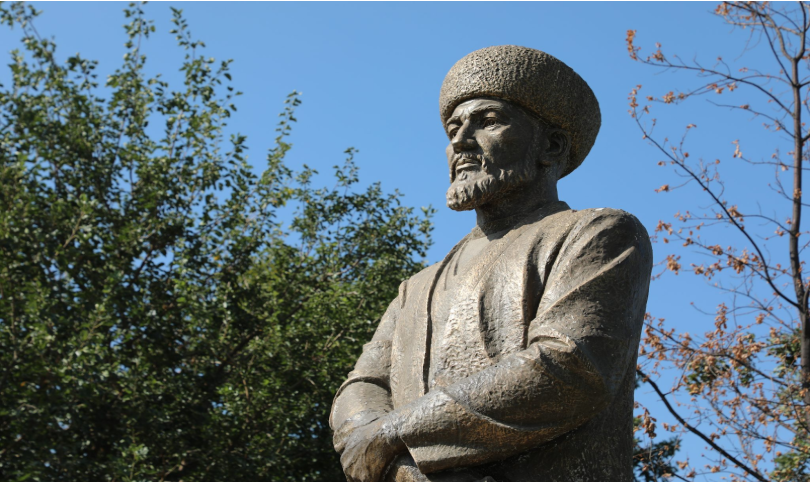
The Berdaq National Museum is dedicated to the great 19th-century poet-enlightener, whose name is given to the city's theater and avenue. This memorial museum is not just a collection of ancient books, but a real portal to the world of nomadic culture. The museum building itself is an architectural treasure with a vibrant national flavor.
● Personal belongings and manuscripts. The museum houses Berdaq's original manuscripts, his books, and personal belongings. The poet's handwriting, his dried-up inkstand - such details create a unique atmosphere, allowing you to feel connected to the era.
● Musical Heritage. The exposition includes musical instruments used in nomadic culture. Kobyz, dutar, sybyzgy - some of these instruments can not only be seen but also heard on record, which adds additional depth to the perception.
● Jewelry art. A special pride of the museum is the collection of traditional jewelry: silver bracelets, forehead ornaments, and braid pendants. This collection allows us to better understand the differences between Uzbek, Kazakh, and Karakalpak cultural identities.
The Berdaq National Museum is a living testament to the region's cultural traditions and heritage. The memorial complex combines important aspects of history and art, offering a unique immersion into nomadic culture. Each museum exhibition allows for a deeper understanding not only of the poet's life but also of the people among whom he lived and worked.
Mizdakhan (an ancient necropolis near Nukus)
In the vicinity of the city, there are ancient historical monuments, which are considered one of the most interesting archaeological sites in the region. One of them is the Mizdakhan complex, located about twenty kilometers from Nukus. This necropolis has existed for many centuries and is associated with many legends. It is believed that the territory has been used for burial sites throughout different historical periods, starting from the Middle Ages.
Mizdakhan is a huge complex of mausoleums, ruins of an ancient city, and religious structures. Many researchers consider it one of the largest necropolises in Central Asia.
Several interesting objects can be seen on the territory of the complex.
● Hill Shamun Nabi. This is the main pilgrimage site and spiritual significance of the complex. According to legends, the biblical-Quranic character Simun (or Shamun) is buried on the hill. There is a belief that if you climb a hill and make a wish, it will definitely come true.Even if you don't believe in mysticism, from the top of the hill you can see a captivating view of the endless Aralkum desert;
● Mausoleums and underground tombs. The complex includes mausoleums belonging to different eras. One of the most impressive is the Mazlumkhan-Sulu Mausoleum, which is famous for its unique acoustics and partially preserved ganch carvings;
● Zoroastrian burial grounds. Archaeologists have discovered traces of fire worshippers' burial rituals. The place has been used for religious rituals for thousands of years, and its energy continues to this day with unique features that create an atmosphere of reflection.
The unique historical and cultural heritage combines elements of ancient burial practices, architecture, and religious customs. This place is an important object for studying the history and traditions of the region, symbolizing the connection of times.
Chilpiq (Silence Tower)
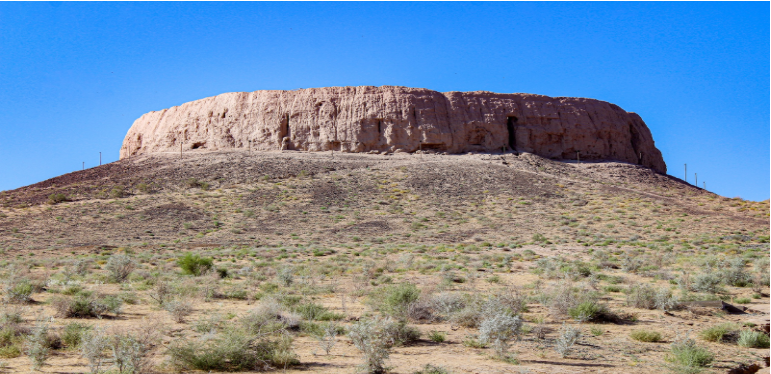
Not far from Nukus, there is another unusual historical site - the Chilpik fortress. This ancient structure is located on a cone-shaped hill and is clearly visible from afar.
It is believed that the fortress was built more than two thousand years ago. Some historians suggest that it was used in the Zoroastrian burial rites of fire-worshippers in Central Asia. According to the dogmas of Zoroastrianism, followers of the religion left the bodies of the deceased here for the birds to eat, so as not to desecrate the sacred elements - earth and fire.
● Climbing to the structure. Climbing to Chilpiq is carried out along a steep path and requires certain physical effort, especially during the hot season. It is recommended to have a reserve of water;
● Peak and panorama. After climbing the hill, the visitor finds themselves on a platform where silence reigns, broken only by the gusts of wind. From the top of the hill, a circular panorama of the desert area opens, allowing you to assess the scale and isolation of this sacred place;
● Preserved structural elements. Remnants of stone walls and interior rooms can be traced within the monument. According to archaeologists, a secondary ritual of cleansing bones could have been performed in these premises after predatory birds freed them from soft tissues.
Chilpik is especially interesting for history and archaeology enthusiasts. It allows you to see the traces of ancient civilizations that existed on the territory of the region. In addition to its historical value, the fortress is known for its beautiful views. Many travelers come here to see the sunset over the steppes of Karakalpakstan.
Fortresses of ancient Khorezm (Toprak-kala, Kyzyl-kala, Ayaz-kala)
In the vast territory of the desert zone of present-day Karakalpakstan, ruins of fortified settlements that once were part of ancient Khorezm have been preserved. These archaeological sites are material evidence of the existence of a highly developed civilization that controlled key sections of the Great Silk Road. Due to their relative territorial proximity to each other, the examination of these monuments is typically carried out within a one-day excursion route, which allows for a holistic understanding of the region's fortification architecture.
● Toprak-kala. Historical research indicates that during its functioning period, the interior walls of the structure were decorated with polychrome paintings, and the ceremonial halls were used for official ceremonies and receptions. Currently, the monument represents massive remnants of clay walls, forming a labyrinth of rooms and corridors, which allows for the reconstruction of its original layout;
● Kyzyl-kala. The fortress, whose name translates as "Red" (due to the shade of local clay), has a clear square configuration in plan and is equipped with powerful corner protruding towers. The fortification characteristics of the structure provide a clear understanding of the principles of defense against the raids of nomadic tribes. Climbing to the remaining wall sections allows you to visualize the tactical positions of the fortress defenders;
● Ayaz-kala. The most picturesque complex of three fortresses, consisting of several fortresses located on the peaks of natural hills. It is recognized as the most expressive in terms of landscape and architectural ensemble. Under the rays of the setting sun, the clay walls acquire a rich fiery hue.
The fortresses of ancient Khorezm are the most important historical sources illuminating the military organization, urban planning traditions, and socio-political structure of the region in the era of antiquity and the early Middle Ages. Visiting Toprak-kala, Kyzyl-kala, and Ayaz-kala allows one to trace the evolution of defensive architecture and provides a unique opportunity to touch upon the material culture of the peoples who inhabited the lower reaches of the Amu Darya.
Berdaq Karakalpak State Academic Musical Theater
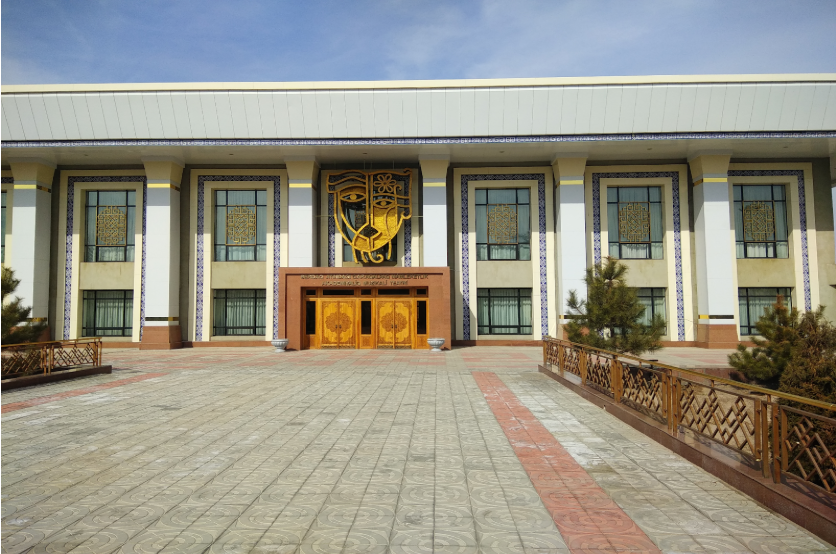
The theater building with columns and national ornaments is itself an architectural monument of the Soviet era with a national flavor. But the main thing, of course, is inside. Performances in Karakalpak and Uzbek are regularly staged here. The theatre plays a key role in preserving cultural traditions by attracting young actors from the local university. Visitors often praise the acoustics of the hall and the emotional depth of the productions. The repertoire includes both dramas about historical figures like Berdaq and contemporary plays about everyday life. Tickets can be purchased online or at the ticket office, with affordable prices even for budget travelers. Before the performance, walk around the foyer, where photos from the theater's archive are displayed. If you come during the festival season, you can see guest troupes from other countries.
Popular theatre productions:
● Classical Karakalpak dramas. Performances based on the works of Berdaq and Ajiniyaz, focusing on the themes of freedom and identity, with elements of folklore and lively music;
● Modern interpretations. Adaptations of Shakespeare or Chekhov with local accents, where actors add elements of Karakalpak culture for fresh perspective;
● Children's performances. Interactive fairy tale productions, ideal for families, using puppets and costumes inspired by folk motifs;
● Experimental shows. Contemporary performances addressing Aral Sea ecology topics, with elements of dance and multimedia.
The Berdaq Karakalpak Musical Theater is a true keeper of national traditions and language. Visiting his performances allows you not only to touch the contemporary theatrical life of Karakalpakstan but also to feel its living connection with its historical roots.
Nukus Central Market
Nukus's central market is not just a place of trade, but a true center of attraction for city life and a hub of local color. Upon entering its territory, the visitor finds themselves in a space dominated by multilingual dialects, rich colors of fruits and spices, and the aroma of fresh pastries and spices. Here, there is not so much buying and selling of products as familiarization with the traditional way of life and gastronomic culture of Karakalpakstan.
● Dried fruits and nuts. The Aral Sea region has long been famous for its apricots and melons. Local dried apricots are distinguished by their delicate texture, and uryuk (a whole dried apricot with a pit) has a rich honey-sweet taste. It's also worth paying attention to the diverse varieties of raisins and select walnuts that can be purchased directly from local producers here;
● Spices. Spices attract attention with their abundance of zira - an essential component of real Uzbek pilaf, sour barberry and saffron that gives dishes a golden hue. Traders willingly let customers taste spices and share tips on how to use them;
● Fish. Despite the ecological disaster of the Aral Sea, fishing has persisted in the remaining water bodies - the Amu Darya and a few lakes. The market offers fresh and dried local fish, which allows for an understanding of modern fishing in the region;
● Bread. Hot bread freshly taken from the tandoor remains an unchanging attribute of the morning market. Their purchase can be a great start to the day and an opportunity to touch the centuries-old traditions of baking.
Visiting the Nukus market allows travelers not only to purchase local products but also to immerse themselves in the city's daily life. Vivid tastes, fragrances, and lively emotions of conversation with sellers remain in memory no less distinctly than impressions from ancient castles or museum exhibitions.
Ecological Museum in Muynak
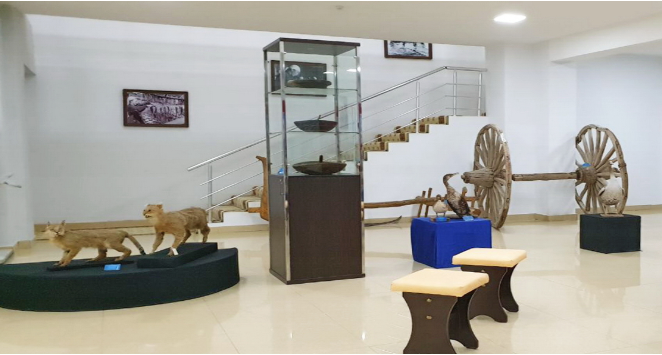
If you came to Moynaq to see the Aral Sea and its unique landscapes, be sure to visit the Ecological Museum, which is just a few hours away. This place perfectly complements the region's landscape and allows for a deeper understanding of the tragedy that befell this once great body of water. The museum is located in the old hospital building, and its atmosphere is imbued with a special, tragic charm of the bygone era.
● Exposition "Sea before." Photos from the 60s-70s tell about fishing villages, port cranes, and abundance of fish. In those times, fish was so affordable that it was even used for heating homes - a fact that today seems incredible.
● Ship models. Ship models made by local craftsmen depict ships that once sailed in the waters of the Aral Sea. Fish trailers and dry cargo trucks, now rusting in the sands just a few kilometers from the museum, remind of their former grandeur.
● Water and soil samples. Salt flasks, sand samples, and dried plants that have been able to adapt to new conditions. This museum is not just an exposition, but a kind of commemorative candle to the departed sea. Leaving it, even the most resilient traveler feels a heavy weight in their heart.
Visiting the Ecological Museum in Muynak complements the picture of the region's life, starting from ancient times and ending with the tragedy caused by ecological disasters. This museum, along with other exhibitions, allows you to understand not only the history of Karakalpakstan, but also the soul of its people who have lived through and continue to live between the greatness of the past and the complex reality of the present.
Trip to the Aral Sea
One of the most unusual routes from Nukus is considered to be traveling to the former Aral Sea. It was once one of the largest lakes in the world, but at the end of the 20th century, it almost completely dried up.
Today, the territory of the former sea has turned into a vast desert called Aralkum. This place attracts travelers, researchers, and photographers. The main point of the route is usually the city of Muynak, which was previously a major port.
● The ships' cemetery in Moynaq. One of the region's most notable landmarks. Here, amidst the desolate expanse, stand dozens of rusty fishing vessels that were once used for fishing in the Aral Sea. These abandoned ships remind of a great ecological tragedy;
● The Aralkum Desert. This is a territory formed on the site of the former sea. The landscapes here seem completely unworldly: large spaces covered with salt marshes provide a spectacle that is difficult to forget. During the excursion, you can feel yourself in the very center of an ecosystem disaster;
● Remains of port infrastructure. In Muynak, you can see destroyed причаles and old administrative buildings that were once the center of the fishing fleet. These ruins are reminiscent of a time when the city was a thriving port, and now it's a desert zone with devastated industrial infrastructure;
● Unusual salt marsh landscapes. Salt marshes have formed in place of the dried-up sea, creating unique landscapes. White salt marshes reflecting the sun create something like an icy desert, making these places especially photogenic and mysterious;
● Ustyurt Plateau. If you have time and prepared transport (a real SUV), you can go further from Muynak to the Ustyurt Plateau. These are fantastic cliffs (chinks) that extend to infinity.
A trip to the Aral Sea helps to see the consequences of one of the largest ecological disasters in history. This place makes a strong impression and makes you think about human impact on nature. Many travelers consider this route one of the most unusual in Central Asia. It shows a completely different landscape that is rarely seen in other regions.
Conclusion
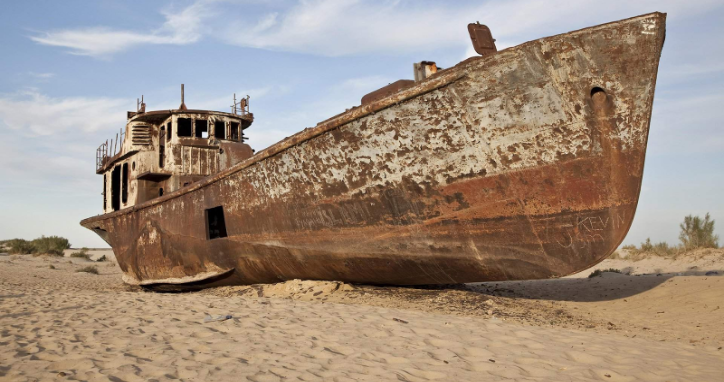
Visiting Nukus and its surroundings goes far beyond the legendary collection of the Savitsky Museum. As the review shows, this region offers a unique opportunity for travelers to touch the layers of eras and cultures: from Zoroastrian shrines and ancient fortresses of Khorezm to the tragic modernity frozen in rusty ships on the bottom of the former sea. The rich ethnographic collections of local museums, the vibrant sound of the national theater, and the color of the central market form a multifaceted portrait of Karakalpakstan, allowing us to understand the soul of the people living at the crossroads of ancient traditions and environmental challenges.
For a journey that is as rich and meaningful as possible, it is recommended to spend at least 3-4 days exploring the region. Be sure to include the route to the plateau to the fortresses (Ayaz-kala, Kyzyl-kala) and to the Necropolis of Mizdakhan - this requires a whole day and rented transport. It is worth dedicating a separate day to a trip to the Aral Sea in Muynak, combining it with a visit to the local ecological museum: this will allow you not only to see the "cemetery of ships," but also to understand the scale of the disaster that has occurred. Don't neglect local gastronomy and market communication, and to plan a visit to the theater, it's better to specify the poster in advance. Remember that the best seasons for travel are spring (April-May) and autumn (September-October), when the desert heat does not interfere with the study of ancient ruins.


